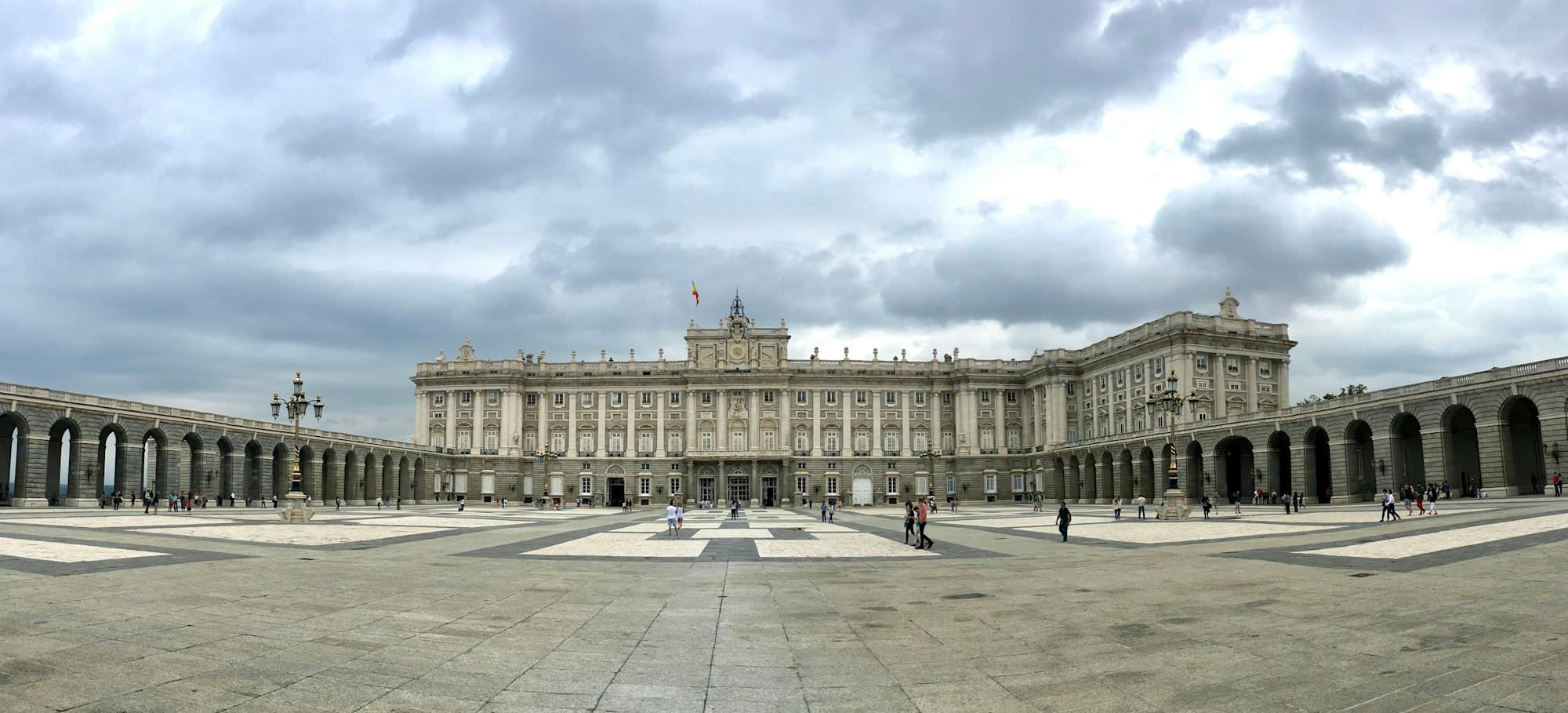
Led by a native English speaker who's called Madrid home for years, this is the story of how Spain became a country, a rivalry between two of its greatest writers, and the single building where its democracy nearly didn't survive.
It starts with a queen's nightmare.
Twenty stone kings still line the gardens outside the Royal Palace, part of a hundred-plus statue commission meant to crown the roofline. They never made it up there. One queen's bad dream saw to that. From here, a short climb up the stairs to a viewpoint gives you the Palace and the Almudena Cathedral in a single view, the moment where the idea of “Spain” starts to take shape.
Then the old town.
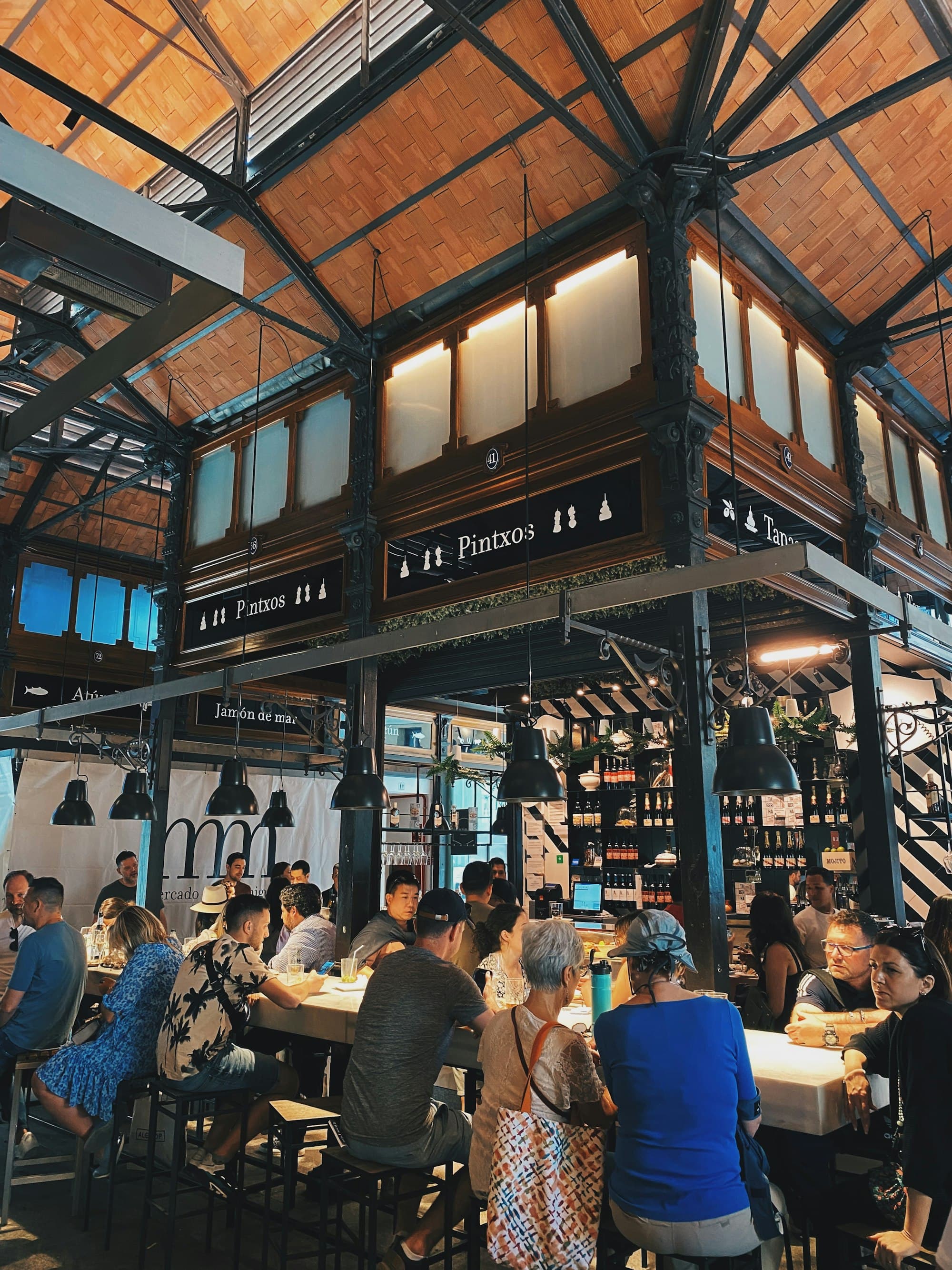
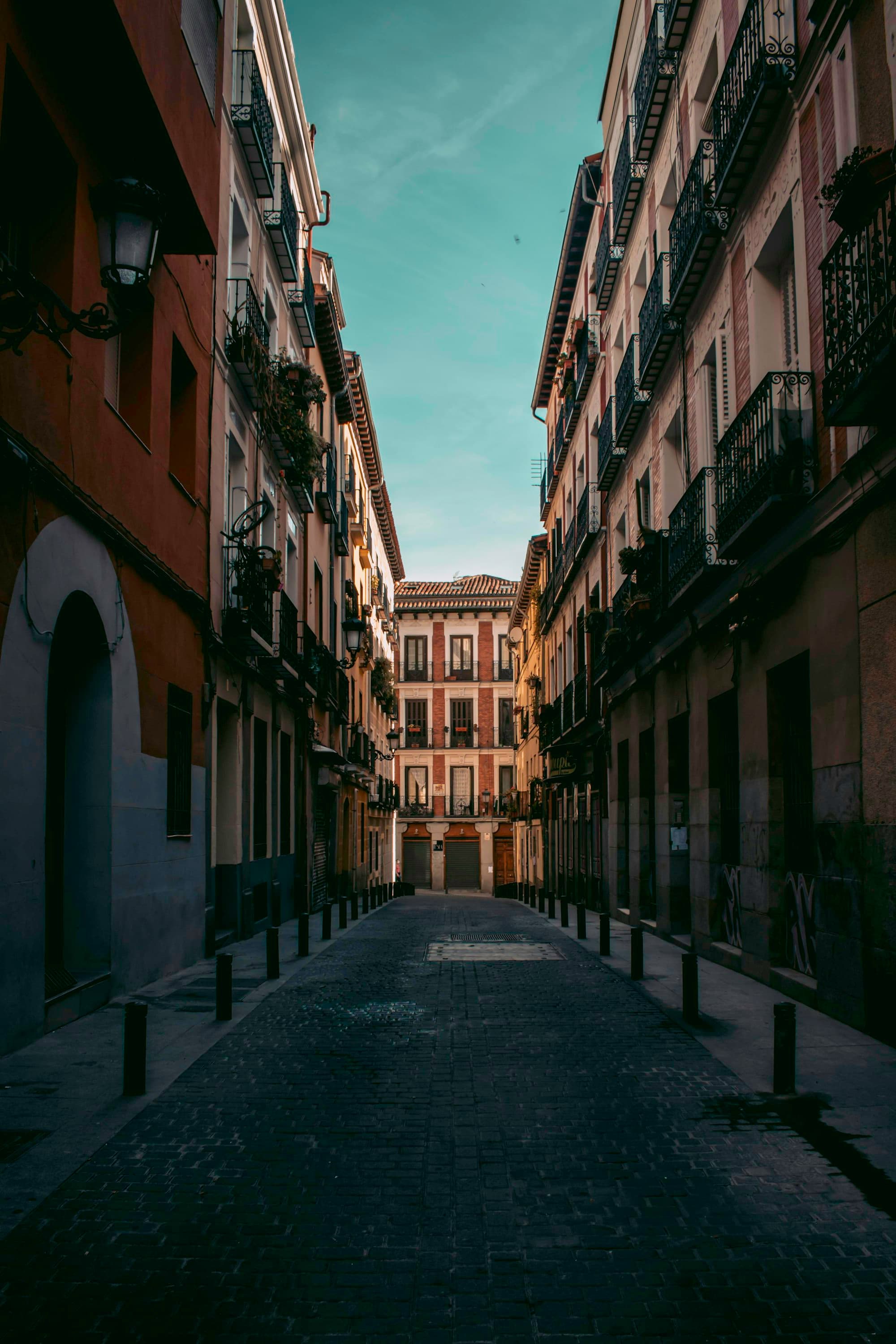
After, we'll go along Calle de Calderón de la Barca and across into Plaza de la Villa, one of the oldest surviving squares in the city. From there it's on past Mercado de San Miguel, its ironwork worth a glance even without stopping, and into Plaza Mayor to hear the story of what it's seen: a market, a bullring, a place of public execution.
A tower with a real story behind its nickname.
A short walk on, a neo-Gothic church tower has been known for over a century as “la atalaya de Madrid,” the city's watchtower, a name inherited from two much older towers that stood on the same spot, used since the 1600s to sound the alarm for fires and call the old town council to meet.
Then into the literary quarter.
Along Calle Atocha and into the neighbourhood where Spain's greatest writers once lived practically on top of each other, home in the 17th century to Cervantes and Lope de Vega, and to a rivalry between the two that played out in plain view of the whole neighbourhood. The route continues to Plaza de Santa Ana, home to the Teatro Español, one of the oldest theatres in Europe, still in continuous operation since 1583.
And it ends at Spain's centre of power.
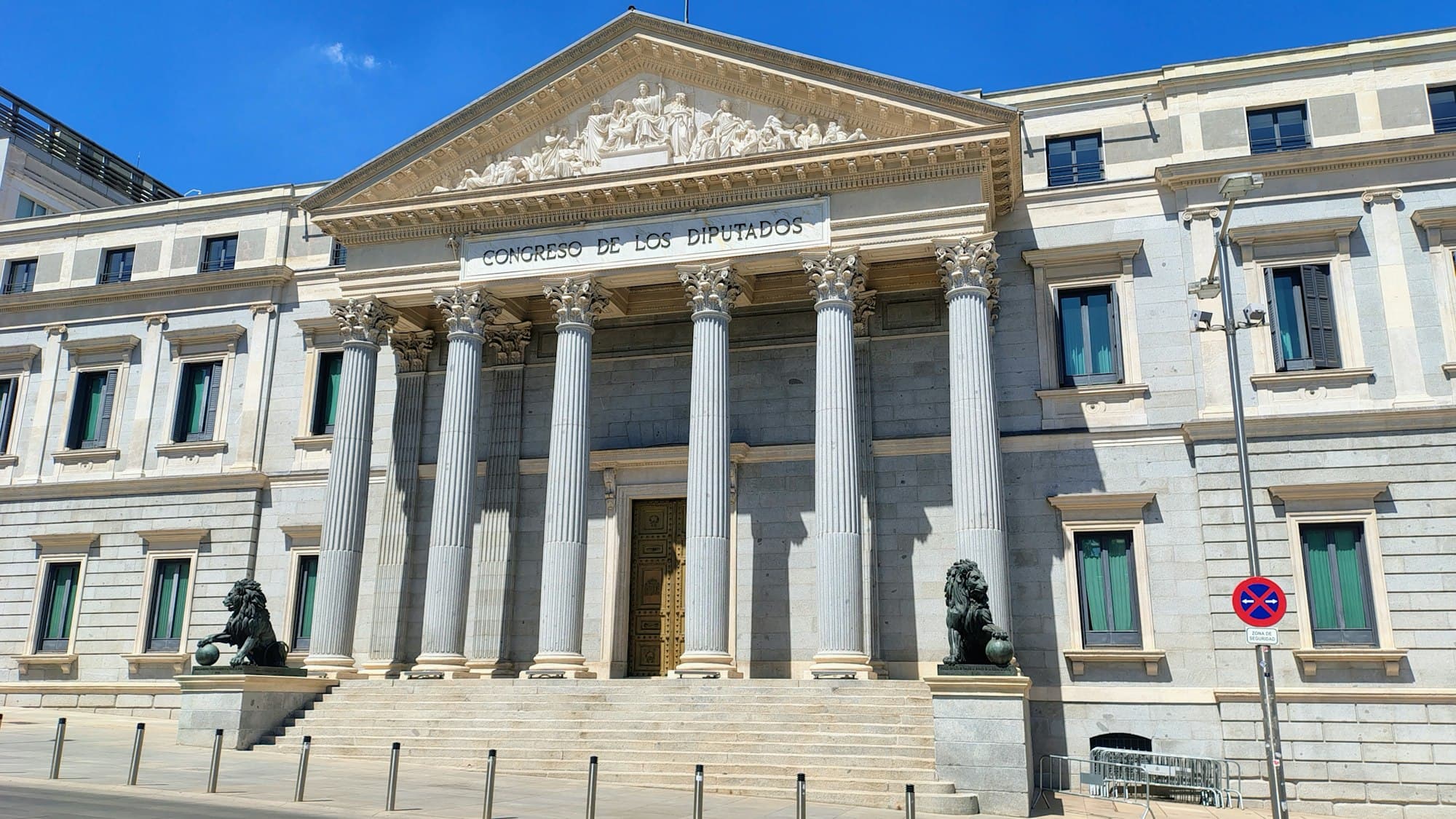
You'll stand outside the Palacio de las Cortes, seat of the Spanish Parliament since 1850, its bronze lions cast from cannons captured in Spain's 19th-century campaign in North Africa, a statue of Cervantes watching from the square outside. This is also the place of an attempted coup in 1981, when armed officers stormed the chamber mid-vote and held the government hostage. Same city, same walk, a completely different perspective of Spain by the time you finish.
What to expect
- 2.5 hours, small groups only (max 8), led by a British guide who's called Madrid home for over 10 years
- Every stop is free, open ground, no tickets, no queues, no rushed five-minute dash through a museum
- €25 per person
- English-language, walking pace, with time to enjoy the sites and take photos
Meet at Plaza de Oriente. Finish at the Spanish Parliament. In between, a city and a country, told properly.
Meeting point
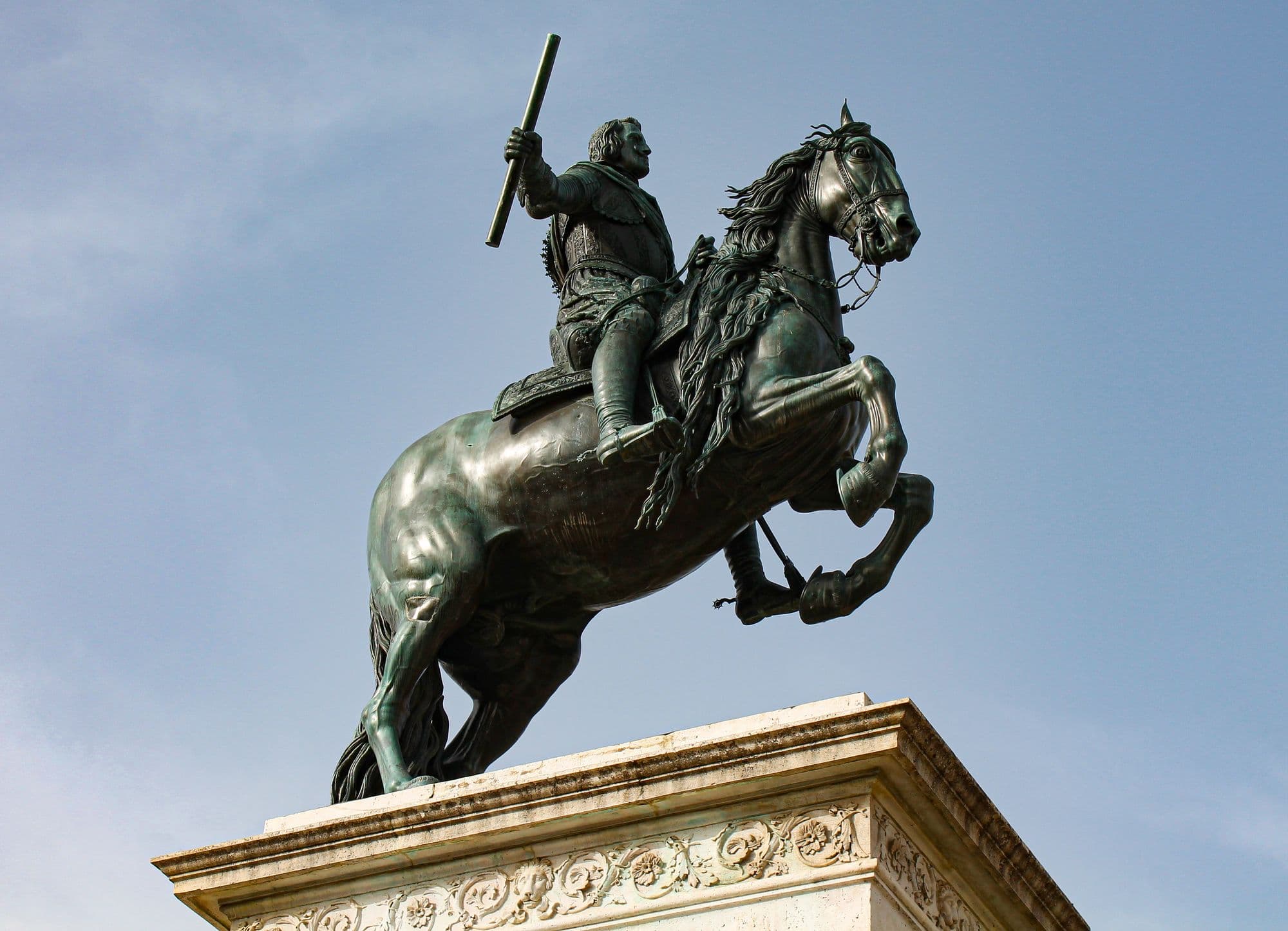
We meet at Plaza de Oriente, right in front of the Royal Palace, beside the statue of King Philip IV on horseback. Look for the guide holding a small burgundy sign. Please arrive five minutes before the start: 10:30 on Thursdays and Fridays, 11:00 on Saturdays and Sundays.
The embedded map needs a non-essential cookie from Google. Accept cookies to load it here, or view the location directly on Google Maps instead.
Frequently asked questions
What's the minimum group size to run the tour?+
The tour runs with a minimum of 2 people booked. If your date doesn't reach that minimum, we'll contact you at least 24 hours beforehand to rebook onto another date or offer a full refund — your choice.
What's the cancellation policy?+
Free cancellation up to 48 hours before the start time, full refund. Inside 48 hours, we're unable to offer a refund, since a small-group tour can't easily fill a last-minute space — but we're always happy to move you to another date if you let us know.
Is the route accessible?+
The route is entirely on foot, on paved streets and squares, with some cobblestones and a few gentle slopes typical of Madrid's old centre, plus a short flight of steps up to the Palace and Almudena Cathedral viewpoint. Get in touch before booking if you have specific mobility questions and we'll talk through the route with you.
What should I wear or bring?+
Comfortable walking shoes are the only real requirement, cobblestones are unforgiving in anything else. Bring water, especially between May and September, and a light layer if it's early in the day. No tickets or reservations are needed for anything on the route.